

Water Heating Solutions
Heat pump water heating — the same hot water, a fraction of the bill.
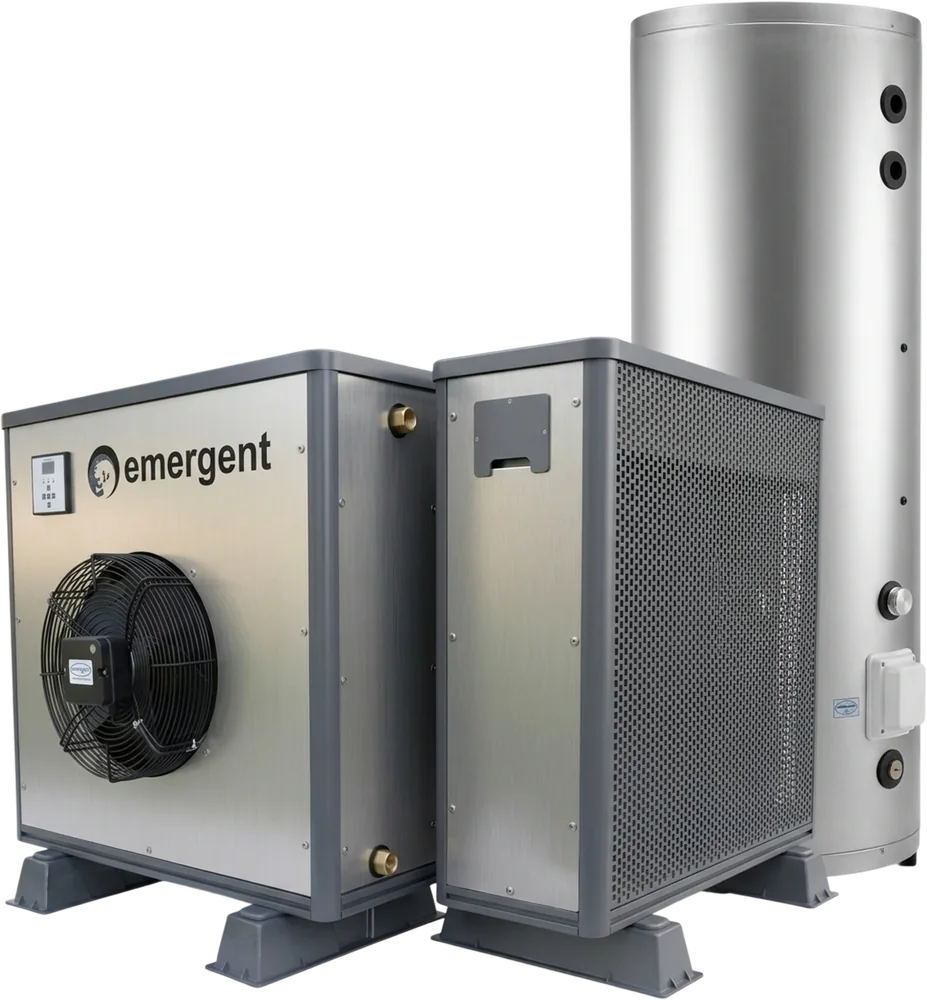
Heating water is one of the biggest hidden energy costs in a home or business. A heat pump moves heat from the air into the water instead of making it from electricity, so it delivers the same hot water on a fraction of a geyser’s power — day or night, in any weather. Ours connect over Wi-Fi to schedule around how you live, and we design the storage, the recovery rate and the circulation, not just the heater.
- 3–4×
- units of heat for every unit of electricity
- 70–80%
- lower running cost than an electric geyser
- 24 × 7
- day or night, sun or monsoon
- Wi-Fi
- scheduling and monitoring from your phone
How it works
It moves heat. It does not make it.
That is the whole trick: an electric geyser turns electricity into heat, while a heat pump uses a little electricity to move heat that is already in the air into your water.
- 1
It takes heat from the air
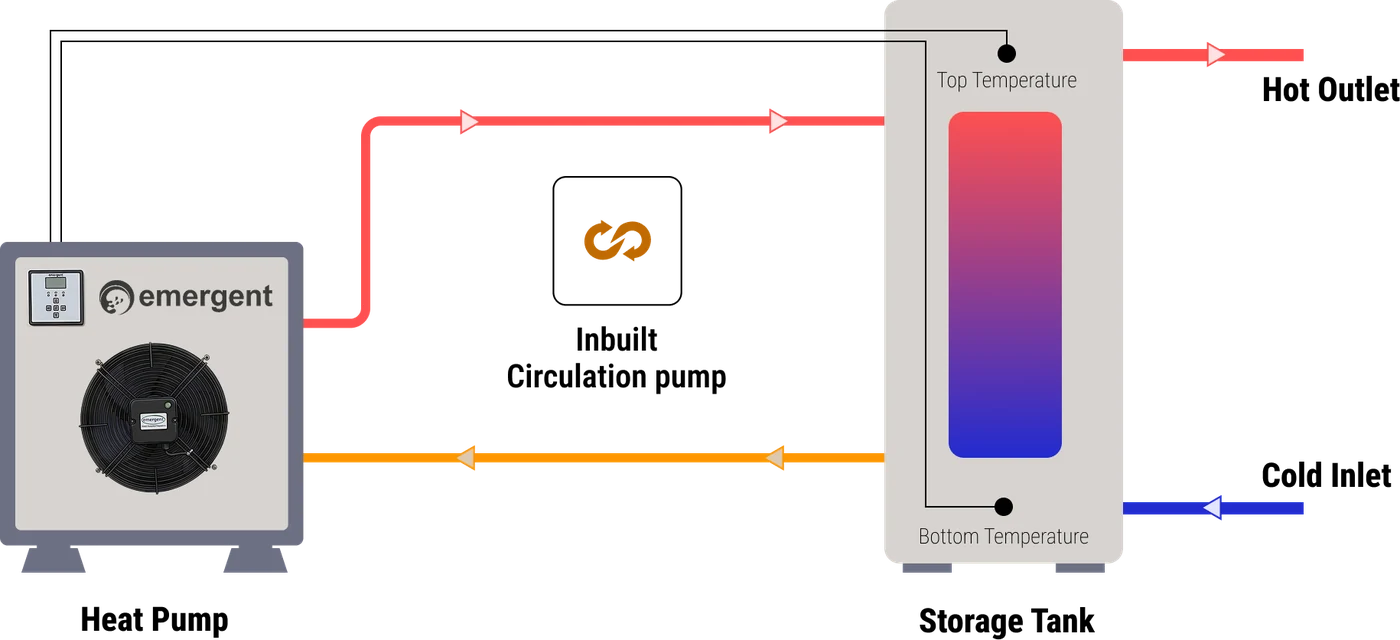
A fan draws outdoor air across the evaporator, where a refrigerant soaks up its heat — even when the air feels cool to you.
- 2
The compressor concentrates it
Compressing the refrigerant raises its temperature well above what the water needs.
- 3
The heat goes into the water
In the heat exchanger that heat passes into the water, and the cooled refrigerant goes round again.
- 4
The tank stores it, hot
A built-in circulation pump loops water between the heat pump and the storage tank; sensors at the top and bottom keep it at the temperature you set.
Why a heat pump
Efficient, all year, and smart
A fraction of the electricity
A geyser turns one unit of electricity into one unit of heat. A heat pump delivers three to four. For a family of five in Gujarat at ₹8/kWh, that is about ₹1,100 a month saved.
Day, night and monsoon
It heats from the air, not the sun, so it works at night and through cloudy weeks. In winter it keeps going with less output — we size it for January water.
Smart, on your phone
Dynamic heating modes and Wi-Fi scheduling: heat when you use hot water, rest when you do not, and see it working from anywhere.
Storage that fits the load
Multiple storage options — a tank sized to a family, or external storage sized to a hotel’s morning rush.
Hot at the tap, fast
Pair it with a monitored circulation loop and hot water reaches every tap in seconds, without a pump running all day.
Homes to hotels
The same heat pump serves a villa, an apartment block, a hostel, a factory’s process water or a swimming pool.
Smart Heat Pumps
One heat pump, from homes to hotels
Domestic or commercial, it is the same smart heat pump — what changes is the storage and how it is sized.
Homes, villas and apartments
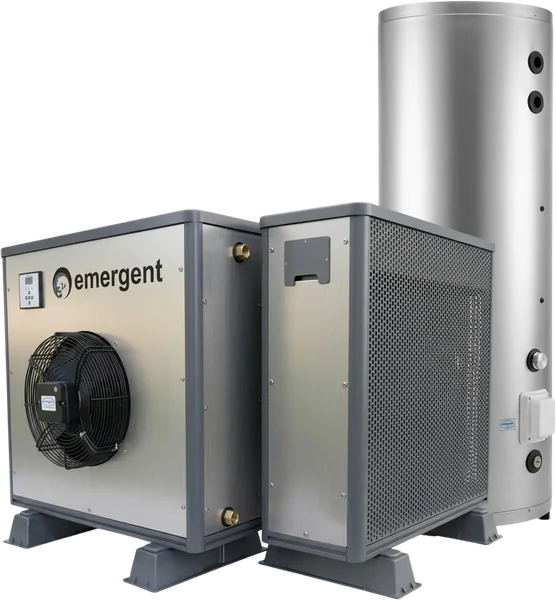
A heat pump with its storage tank, sized to the family and scheduled around mornings and evenings — the same baths, on a fraction of the bill.
- Sized to the household
- Scheduled from your phone
- Replaces the bathroom geysers
Hotels, hostels, industry and pools
External-storage set-ups sized to the daily hot water load — where a bank of geysers runs up the biggest electricity bill, a heat pump saves the most.
- External storage for peak demand
- Process and pool heating
- Monitored from one dashboard
Compare
Heat pump, solar or an electric geyser?
| Heat pump | Solar water heater | Electric geyser | |
|---|---|---|---|
| Electricity for the same hot water | Low — 3 to 4 units of heat per unit | None on a sunny day; backup when cloudy | Highest — one unit of heat per unit |
| Night and monsoon | Works | Needs its backup heater | Works |
| Space | Outdoor unit and a tank | Roof area for the collectors | Compact, on the bathroom wall |
| Best for | Most homes, and every large load | Sunny roofs with space to spare | Small, occasional loads |
Also available: solar and electric water heaters
Where they suit the site better — a sunny roof with room to spare, or a single bathroom’s small load.
Solar Water Heaters
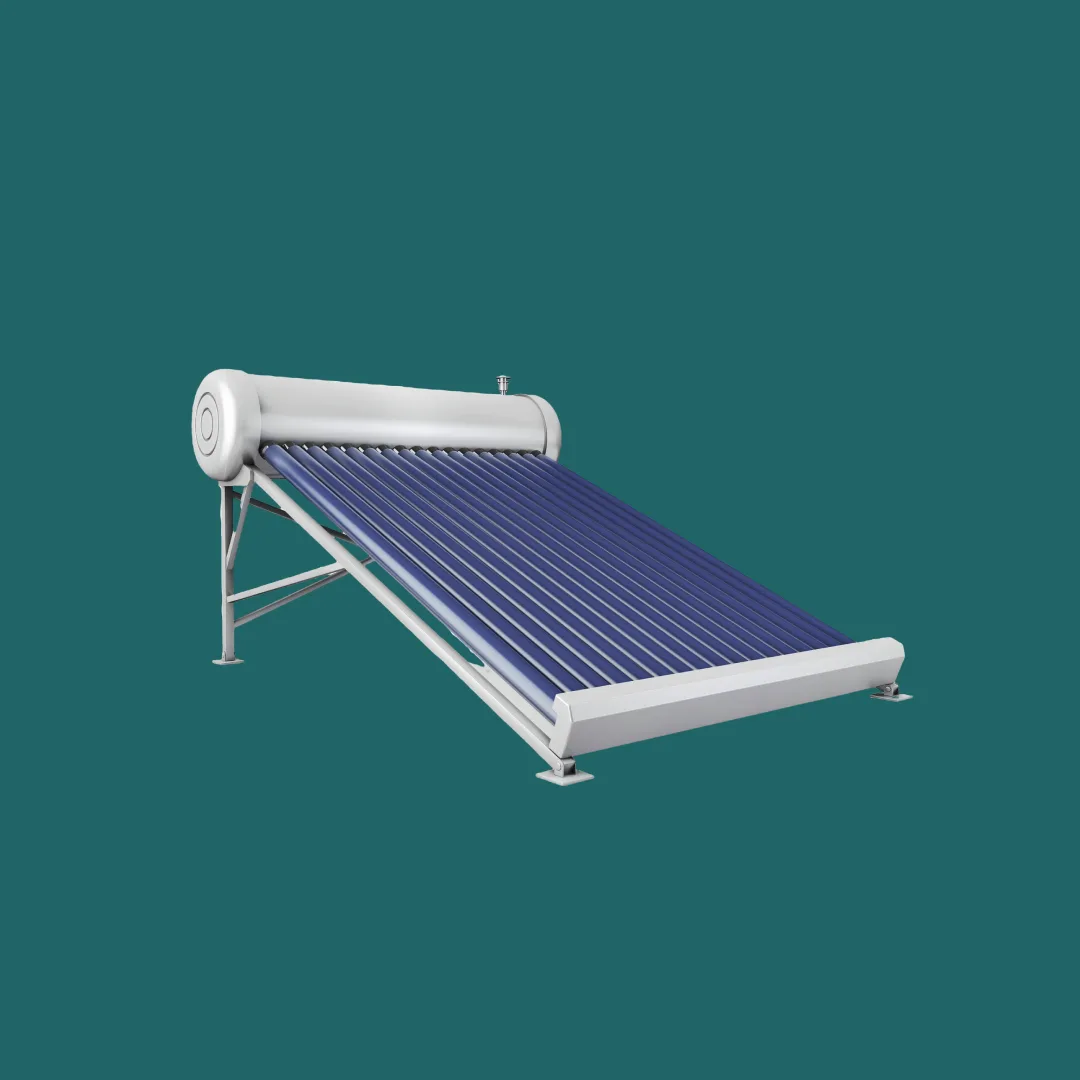
Solar water heating panels, with hybrid setups that fall back to conventional heating when the sun doesn't cooperate.
Electric Water Heaters
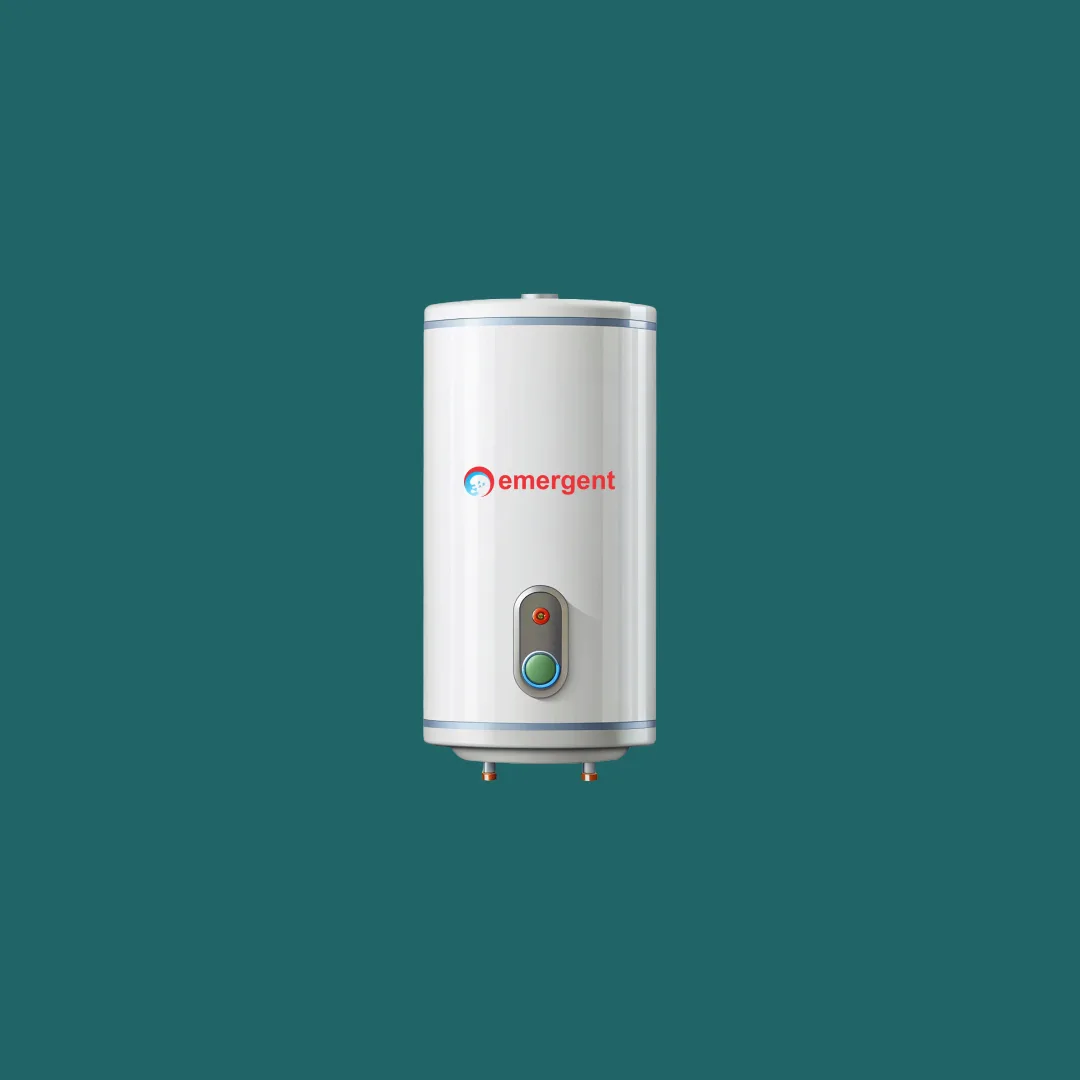
Dependable conventional electric water heaters in a range of sizes for domestic use.
Products
Products that achieve this
Heat pumps, answered
How much electricity does a heat pump save? +
A geyser turns one unit of electricity into one unit of heat. A heat pump moves heat from the air, delivering three to four units of heat per unit of electricity in Indian conditions, so running costs fall by roughly 70–80%. For a family of five in Gujarat at ₹8/kWh, that is about ₹1,100 a month.
Does a heat pump work in winter? +
Yes, with less output. At around 7 °C air, a heat pump gives roughly 80% of its rated heat at a COP near 3. We size for winter water and air temperatures, so the system still keeps up in January. In hill stations with near-freezing nights, add a backup heating element.
Does it work at night or in the monsoon? +
Yes. A heat pump takes its heat from the air, not from sunlight, so it heats at night and through cloudy weeks just the same.
Can one heat pump serve a hotel, hostel or pool? +
Yes. For large loads the heat pump works with external storage sized to the daily hot water demand, so the morning rush draws from a full tank while the heat pump catches up.
Heat pump or solar — which should I choose? +
Solar needs no electricity on a sunny day, but it needs roof space and a backup for nights and cloudy weather. A heat pump works at any hour on a small fraction of a geyser’s electricity. Where the roof is small or shaded, or the load is large, a heat pump is usually the better fit.
Switch your hot water to a heat pump
Tell us how many bathrooms, guests or litres a day — we size the heat pump and the storage, install it and connect it to the app.