
Devyami
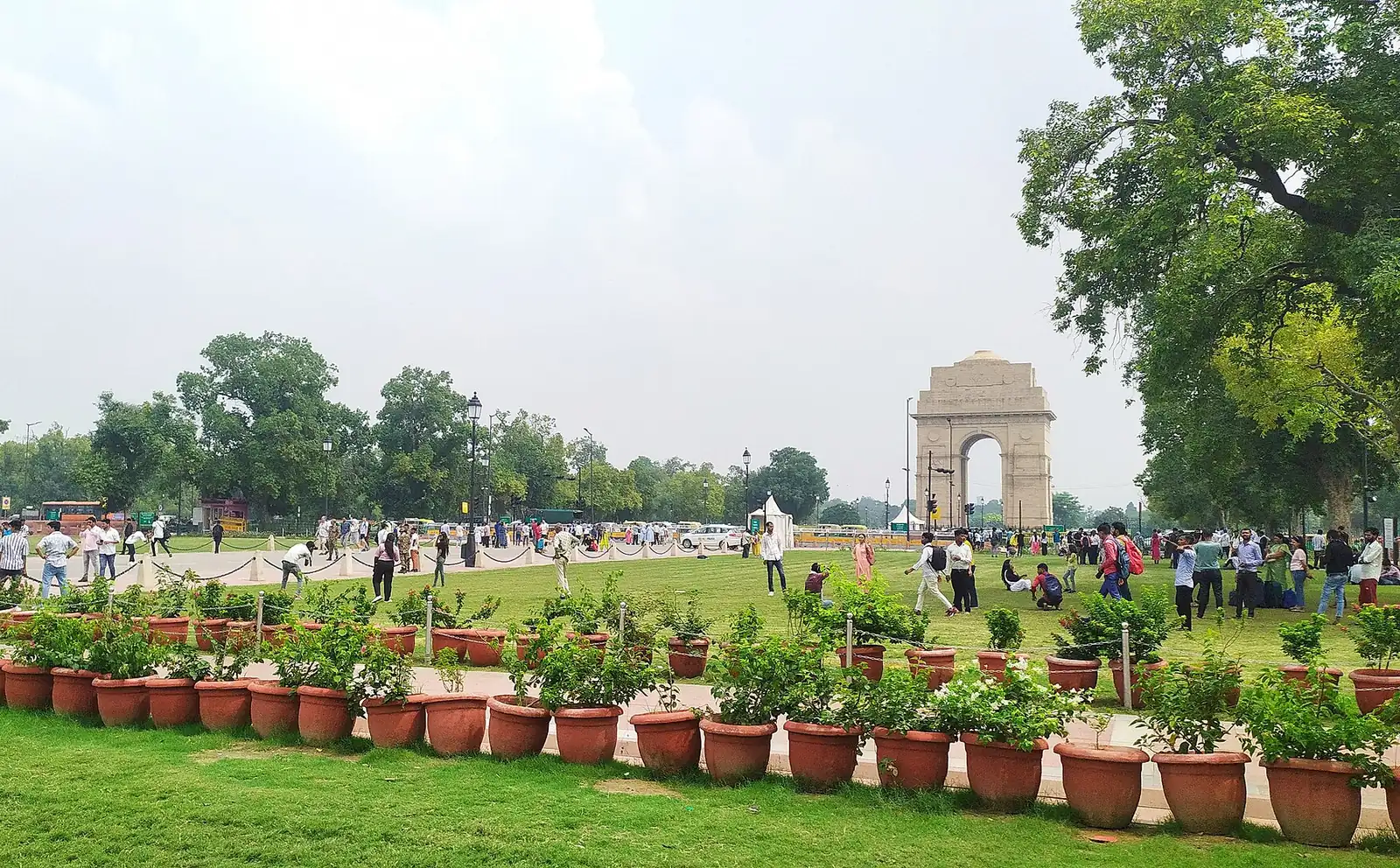
India Gate and its lawns, New Delhi

Smart water solutions in Delhi When the Yamuna falters, your tank should not

Delhi's taps depend on the Yamuna, Haryana's canals and the Upper Ganga Canal, delivered in short timed windows. We automate the sump, the pump and the overhead tank so a household is never caught out.

Main source
Yamuna, Ganga, Bhakra canals
plus around 6,000 DJB tubewells
Typical supply
A few hours daily
about 4 hours on average
Groundwater
Uranium flagged in places
13–15% of CGWB samples, 2025
Winter low
Around 3°C
2.9°C at Safdarjung, January 2026
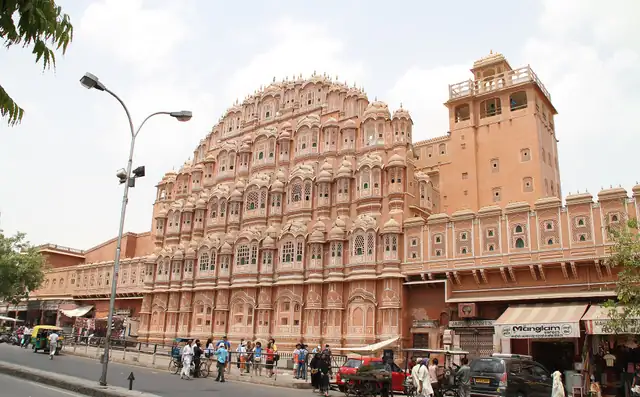
Photo: BhuyanBhaskar · CC BY 4.0

From source to your tap

How water reaches you in Delhi

Delhi Jal Board plans for around 1,000 MGD in summer, drawn from the Yamuna, Bhakra water through Haryana's canals, the Upper Ganga Canal and thousands of tubewells, yet households often get only a few hours of supply a day. When ammonia in the Yamuna crosses 3 ppm, Wazirabad and Chandrawal cut output and colonies from Civil Lines to Greater Kailash get water at low pressure. Our level controllers capture every window into the sump, pressure systems carry it to the upper floors of builder floors and DDA flats, and RO handles borewell water that CGWB has flagged for uranium.

  1. Step 1

    Three river sources

    Raw water comes from the Yamuna at Wazirabad, from Yamuna and Bhakra water carried by Haryana's canals, and from the Upper Ganga Canal that feeds Sonia Vihar and Bhagirathi.

  2. Step 2

    Nine treatment plants

    DJB's nine plants, from Haiderpur to Sonia Vihar, targeted around 867 MGD for summer 2026, with roughly 135 MGD more from ranney wells and tubewells.

  3. Step 3

    Reservoirs and boosters

    Treated water travels through about 14,355 km of pipelines and over a hundred primary underground reservoirs with booster pumping stations.

  4. Step 4

    Sump to tank

    It reaches your connection in a timed window, so whatever lands in the sump has to be lifted to the overhead tank before the next gap.

  5. Where we take over

    Your tank, automated

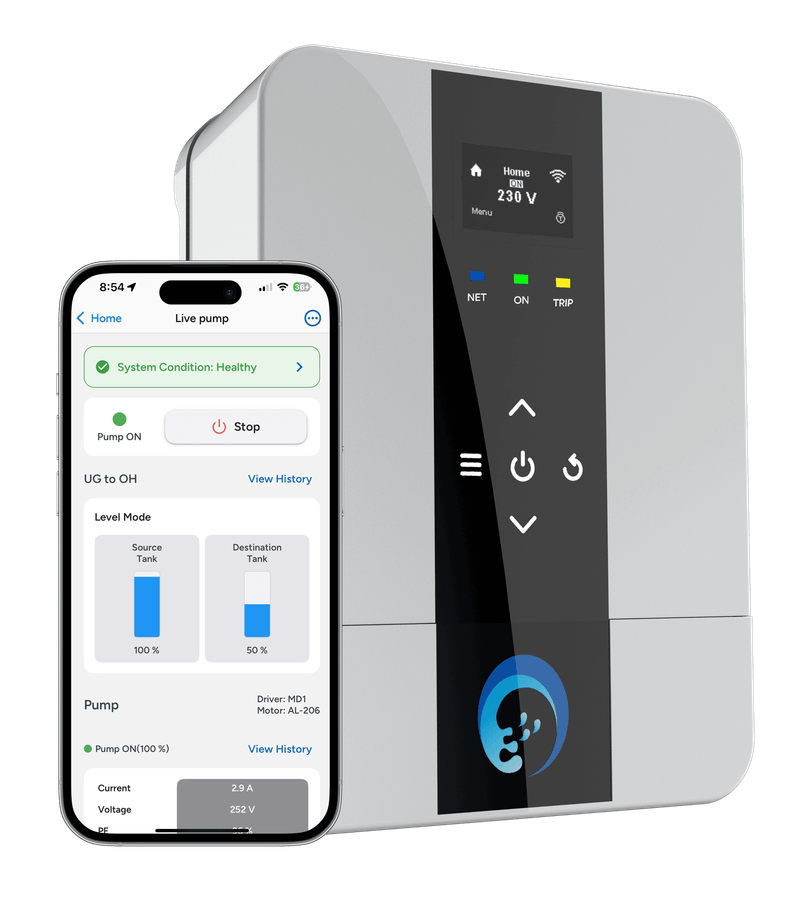
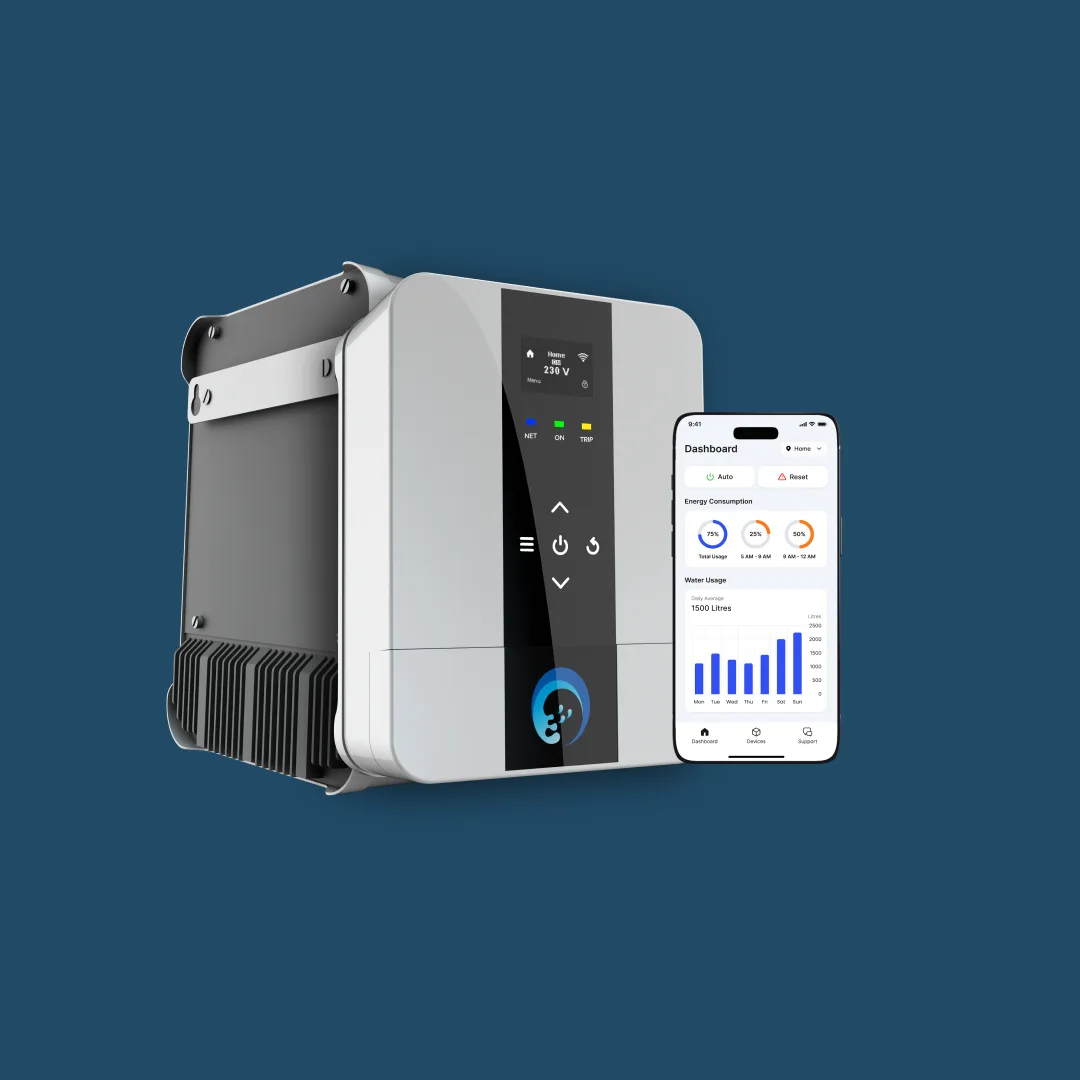
    Sensors read every tank, an APCON controller runs and protects the pump, and the app shows it all on your phone.

    How automation works →

Delhi's water, honestly

What Delhi throws at your water system, and the fix for each

Ammonia days at Wazirabad

When ammonia in the Yamuna at Wazirabad pond rises above 3 ppm, the Wazirabad and Chandrawal plants cut production, by roughly 25–50% in January 2026. DJB's own notice warned of low-pressure supply across Model Town, Shalimar Bagh, Karol Bagh, Civil Lines, Defence Colony, Greater Kailash and more.

How we fix it

A sump-and-tank level controller starts the pump only when the sump actually holds water and stops it before a dry run, so even a thin, short supply is captured in full without anyone standing by the tap.
Short supply, weak pressure upstairs

An analysis in 2021 found the average Delhi household got around four hours of supply a day. When that supply arrives at low pressure, the second and third floors of a builder floor are the first to run dry.

How we fix it

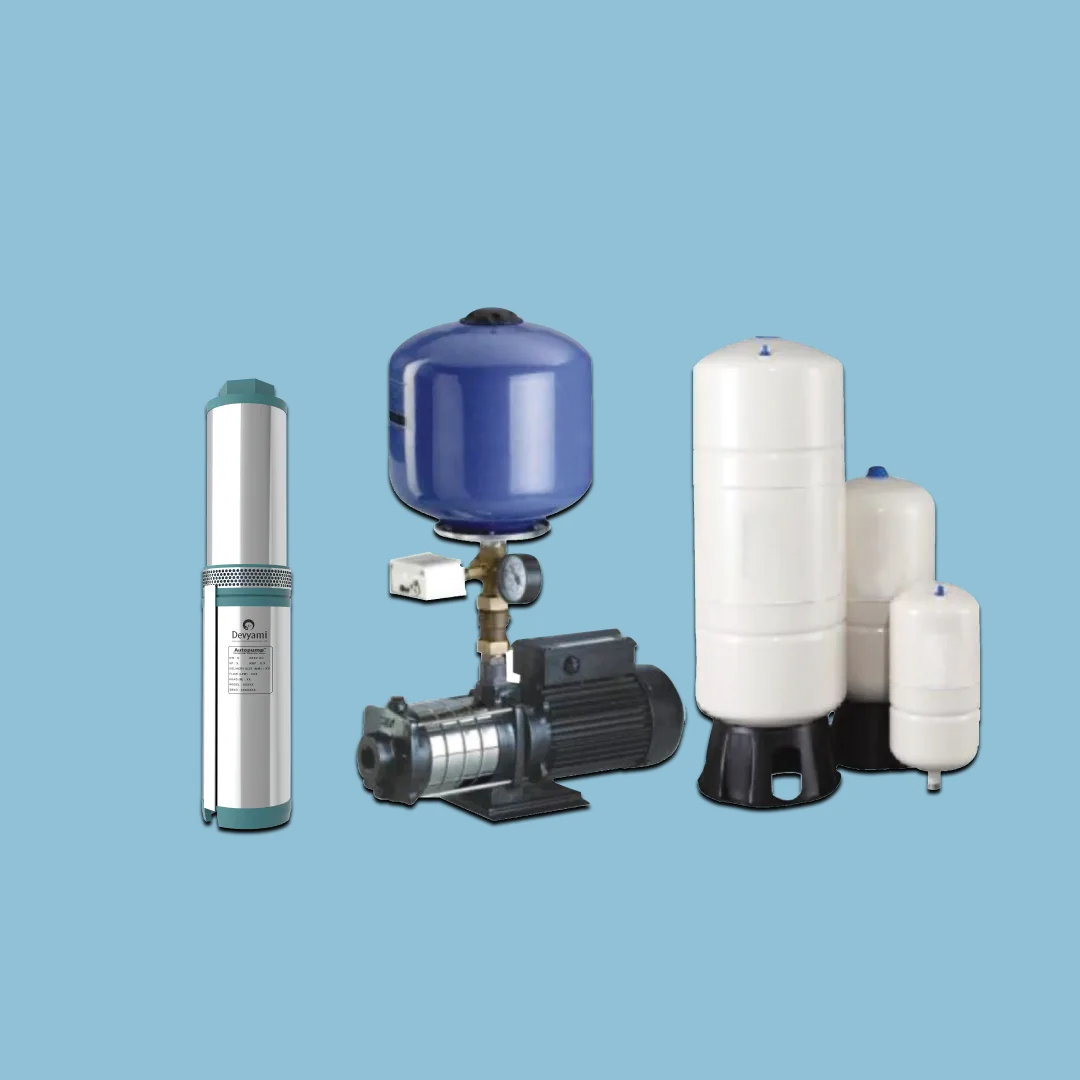
A hydro-pneumatic pressure system with two pumps sharing duty pushes stored water to every floor at steady pressure, and the standby pump takes over if one trips.

Borewells flagged for uranium

CGWB's Annual Ground Water Quality Report 2025 found uranium above the permissible limit in around 13–15% of Delhi's samples. DJB itself plans on roughly 6,000 tubewells in summer, and private borewells draw on the same aquifers.

How we fix it

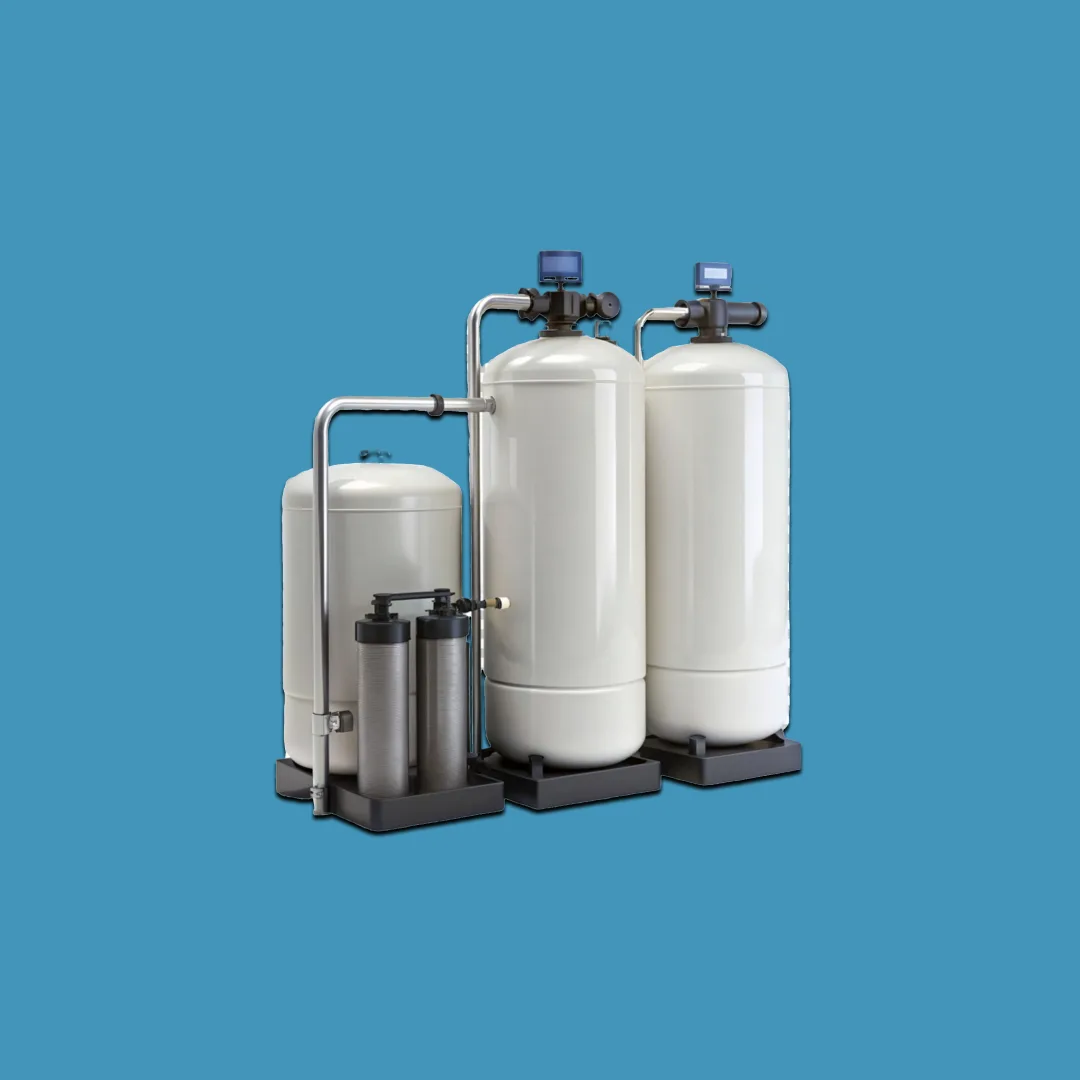
We test the borewell first; where uranium or dissolved solids are high, an RO plant with an RO controller watching pressure and output quality keeps the drinking line safe and the membranes protected.

Near 3°C mornings, 46°C afternoons

Safdarjung's lowest in January 2026 was 2.9°C, with Palam at 2.3°C, while the same Safdarjung station logged 46.8°C on 29 May 2024. Geysers work hardest in December and January, and terrace tanks bake through May and June.

How we fix it

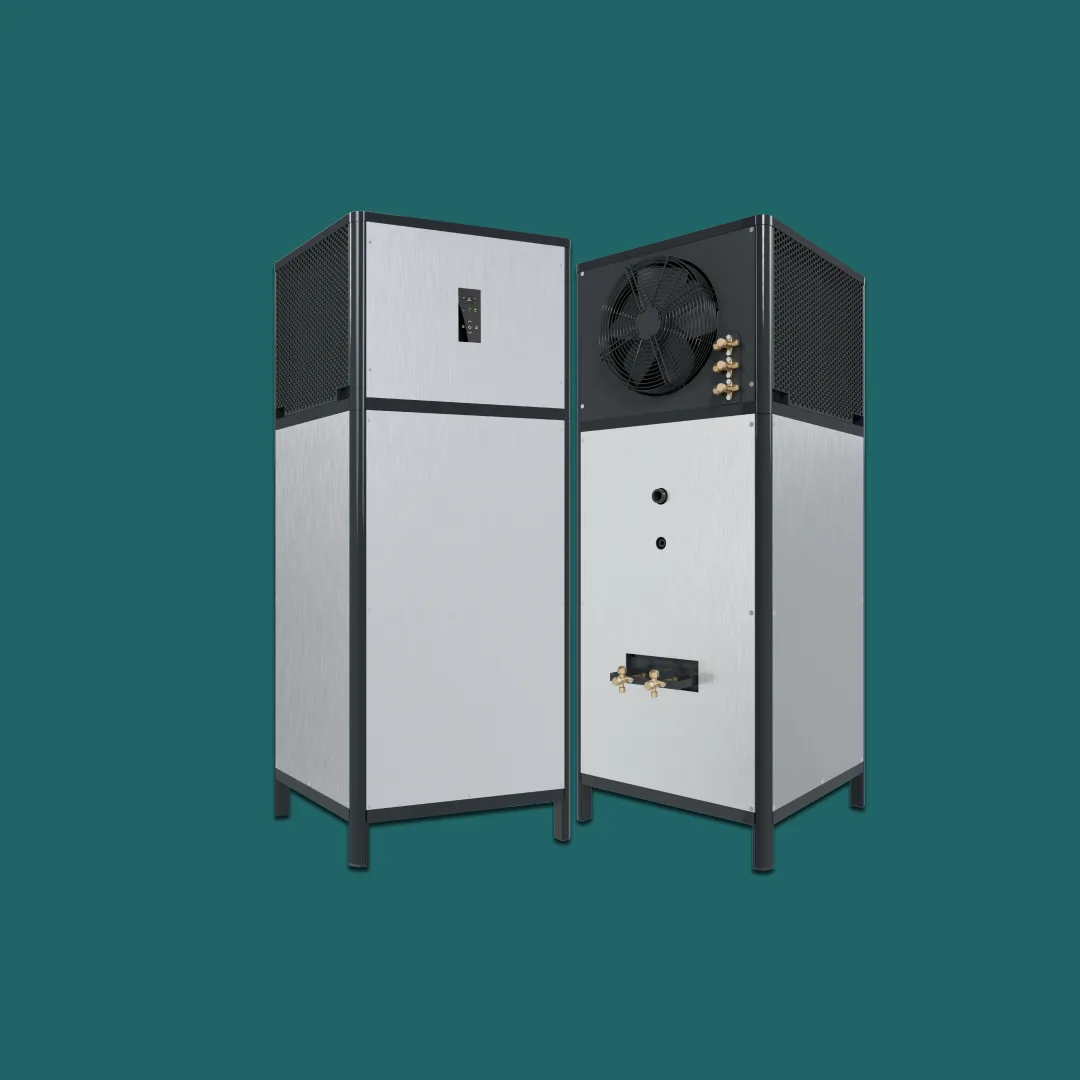
A heat pump or solar water heater with a smart controller delivers hot water at a fraction of a geyser's running cost and schedules heating around the household's actual bath times.

Not knowing when water came

Supply windows shift on ammonia days and in peak summer, so families and RWAs often discover an empty tank only when the tap runs dry. DJB's Summer Action Plan 2026 still counted on around 1,200 tankers a month for water-deficient areas.

How we fix it

Our IoT app shows sump and tank levels live, alerts you when supply arrives or a pump trips, and logs daily use, so an RWA spots overflow or leaks before the bill or the tanker queue does.

Something else?

Tell us what your water is doing

Describe it in your own words. An engineer who knows Delhi's conditions will call you back.

Start with a free site visit

Through the year

Delhi's water, season by season

Summer

Demand peaks with the heat, plants run flat out and DJB tankers fill gaps in water-deficient colonies, so full storage before noon matters.

Dry-run protection and usage alerts →

Monsoon

In July 2023 the Yamuna rose to a record 208.66 m and three treatment plants shut, so the monsoon calls for both dewatering pumps and stored water.

Dewatering pumps and UV treatment →

Winter

Mornings fall to around 3°C and low winter flows bring ammonia spikes in the Yamuna, so hot water and backup storage both earn their keep.

Heat pumps and solar hot water →

Watch it run

Watch a building in Delhi run its own water

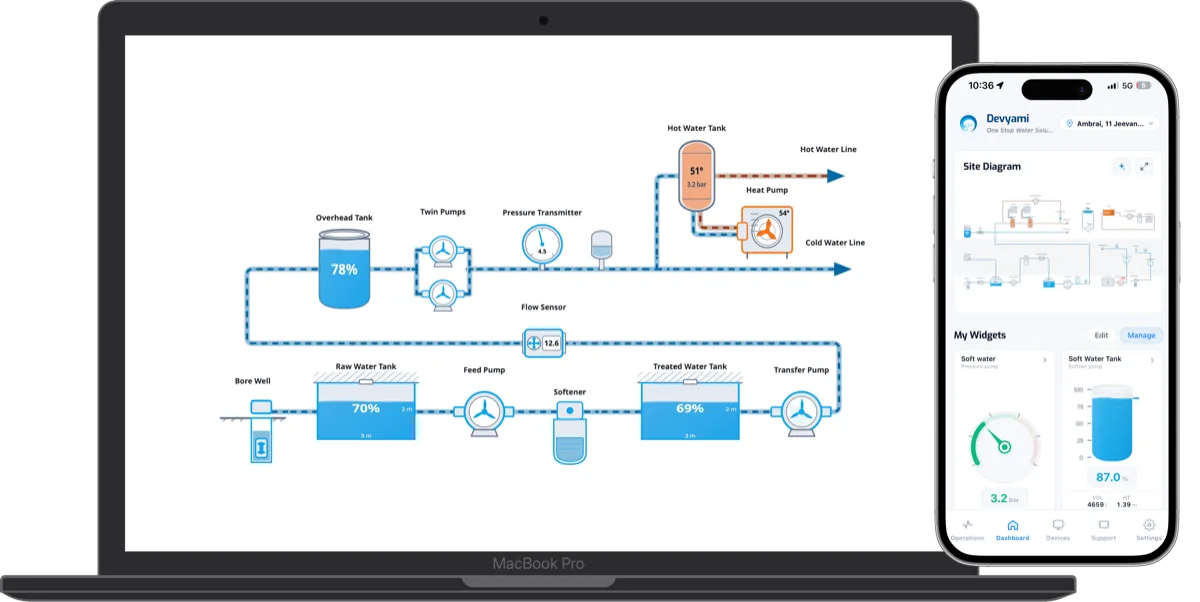
This is the same diagram our customers see in the app. The sump and the overhead tank are both sensed, and one APCON controller decides when the pump runs.

  • The pump starts when the overhead tank is low, but only if the sump has water to give
  • It stops at your full level, so the tank never overflows
  • Dry run, overload and voltage faults trip it before the motor is damaged
  • Your phone shows each level, each pump run and each alert as it happens
74%74%7,400 L7,400 L3 m3 m2 m2 mUnderground TankHydrostatic probePump56%2,800 L56%2,800 LOverhead Tank2.5 mUltrasonicPUMP ON229 VAPCON Controller

Engineered by us since 1996

The controllers behind Delhi's pump rooms

All controllers →
Motor Driver

Motor Driver

Starter, controller and motor protection for one pump — single or three phase.

View product →
P1 · DUTYP2 · STANDBY

Twin Motor Driver

Two pumps from one controller — duty shared, each motor protected on its own.

View product →
66%66%RO membraneRejectTDS 42 ppmHP 12.0 bar

RO Controller

Your RO plant's water quality, pressures and pump trips — live in the app.

View product →
50°

Heat Pump Controller

Runs the compressor, fan, circulation pump and backup heater as one plan.

View product →

Our Workflow

Four steps from first call to lifelong service. Swipe or tap a step.

Free Site Visit
Step 1

Free Site Visit

Our engineers evaluate your requirements and give you accurate consultation for free.

📍 Request Site Visit
Get Quotation
Step 2

Get Quotation

From your requirements we will provide you with a quotation with multiple options.

Installation
Step 3

Installation

Our expert engineers will install, inspect & commission the systems at your site.

After Sales Services
Step 4

After Sales Services

Be it repairs or maintenance we stand by you as you need more services after sales.

🛠 Register Complaint

Across the city

Serving all of Delhi

Old neighbourhoods and new growth corridors alike, from single homes to whole townships.

  • Chandni Chowk
  • Civil Lines
  • Karol Bagh
  • Model Town
  • Shalimar Bagh
  • Rohini
  • Janakpuri
  • Dwarka
  • Rajouri Garden
  • Greater Kailash
  • Defence Colony
  • Vasant Kunj
  • Mayur Vihar
  • Burari

And around Delhi

  • Gurugram
  • Noida
  • Ghaziabad
  • Faridabad
  • Greater Noida
  • Sonipat

Installers and plumbers

Work on water systems in Delhi?

Become a Devyami dealer. You get our controllers, engineering support and the leads from this page.

Become a dealer

Questions from Delhi

What people here ask us

Our builder floor gets DJB water at low pressure for a short time. How do we make sure the top floor gets enough?

Store first, then pressurise. Our APCON motor-driver fills the underground sump whenever supply arrives and protects the pump from dry runs; a hydro-pneumatic system run by a twin-motor-driver then pushes steady pressure to every floor. The same setup carries you through the low-pressure days DJB announces during ammonia spikes.

Is borewell water in Delhi safe to drink?

Only a test can tell, because quality changes from colony to colony. CGWB has flagged uranium in a share of Delhi's groundwater samples, so if your results show uranium or high dissolved solids we size an RO plant with an RO controller for pressure and quality monitoring. If the test is clean, multigrade filtration and UV may be all you need.

Our RWA's basement and lift pit take in water every monsoon. What should we install?

Dewatering pumps sized to the pit, with level sensors that start them automatically and motor protection against dry running. Connected to our IoT app, the RWA gets an alert the moment water starts rising, even at 3 am.

Do you install and service Devyami systems in Delhi?

Yes. Tell us about your building, society or factory and our engineers design the system around Delhi's water. A Devyami dealer or installer then installs, commissions and services it locally, and every connected controller can be checked remotely through our platform. The first site consultation is free.

Will the automation keep working without internet or after a power cut?

Yes. Level switching, pressure control, schedules and every motor protection run inside the controller on your wall, not in the cloud. The internet only carries the live view and alerts to your phone. The controller keeps its own real-time clock and remembers its delays through a power cut.

Can you automate my existing pumps and tanks without new wiring?

Usually, yes. The APCON Motor Driver takes the old starter panel’s place on the wall, on the pump and tanks you already have. Wireless level sensors reach terrace and underground tanks where running a cable would mean breaking walls. A single-pump retrofit is usually done in a few hours.

More answers in our FAQ and guides.

Free site visit

Talk to us about Delhi

Describe your home, society, hotel or factory. We'll design around Delhi's water and connect you with a Devyami dealer who installs and services locally.

0+
Years Experience
0+
Successful Projects
0+
Happy Customers

Prefer to call? +91 99252-26610

Get a solution in Delhi

We'll only use these details to respond to your enquiry. See our privacy policy.

Sources for the Delhi facts on this page