

Water Metering & Batching
You cannot manage what you do not measure.
Water is the one utility most buildings still run blind. Electricity has a meter per flat and a bill to argue with; water has a tanker that came twice this month and nobody quite sure why. A digital flow meter on each line turns that into data — how much moved, through which pipe, at what hour.
Water metering · smart water meter · consumption analytics · leak detection
What makes it work
The parts of the diagram above that are doing the real work.
A meter on every line that matters
One on the borewell, one on the transfer line, one per wing or riser. Inline digital meters go in at a union in the existing pipework — you meter where you will want an answer later, not everywhere.
Counted in the controller, not the cloud
The meter sends a pulse per unit of water and the APCON driver counts them continuously. The totaliser keeps running through an internet outage and syncs when the link returns, so a day is never missing from the record.
Night flow is the leak test
A building between 1 and 5 AM should be still. Any flow at that hour is water leaving the system with nobody using it — the app watches for exactly that pattern, so a slow underground leak is caught in days rather than in a tanker bill.
Batching — a set volume, every time
The meter that counts your consumption can also measure out a dose.
- Set the batch volume in litres; the controller starts the pump or opens the valve
- Flow-meter pulses are counted inside the controller, so the batch is measured on site — not in the cloud
- At the set volume it stops the pump or closes the valve, so every batch is the same
- Each batch is logged in the app with its volume and time
What you set
- Batch volume
- Pump or valve output
- Meter pulse rate
How it is done
Every step below is a retrofit on the system you already have — no replacement pumps, no civil work.
- 1
Meter the lines that matter
One meter on the borewell, one on the transfer line, one per wing or per riser — you meter where you will want an answer later. Inline digital meters install into existing pipework at a union; no re-plumbing the building.
- 2
Pulse into the controller
The meter sends a pulse per unit of water. The APCON controller counts those pulses continuously — so the totaliser keeps counting whether or not the internet is up, and syncs when it returns.
- 3
Read consumption, not just flow
The app shows live rate in LPM and running totals per day, per line and per site, and keeps history you can export for billing or an audit.
- 4
Let the night find your leaks
Set a night-flow alert. If water is moving between 1 and 5 AM when the building is asleep, something is leaking — and you hear about it that week rather than on the next tanker bill.
What it takes
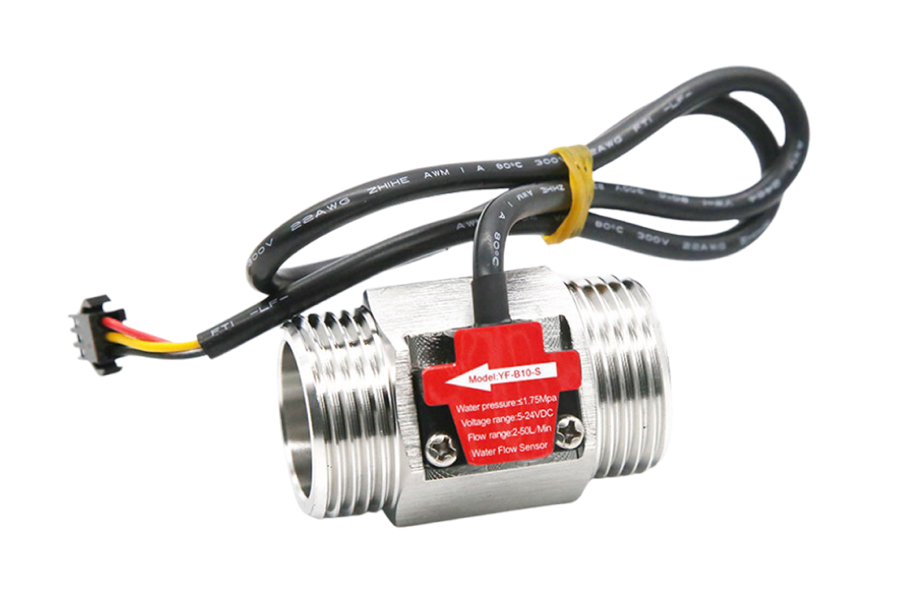
- Inline digital flow meter, sized to the pipe
- APCON smart motor driver — counts pulses, keeps totals locally
- The Devyami app for live rate, daily totals, history and exports
What you get
- Litres pumped today, this week, this month — per line and per site
- Fair, evidence-based cost allocation in societies and multi-tenant buildings
- Leaks found by their night-time signature instead of by the water bill
- Exportable history for audits, billing disputes and consumption planning
Controllers that do this
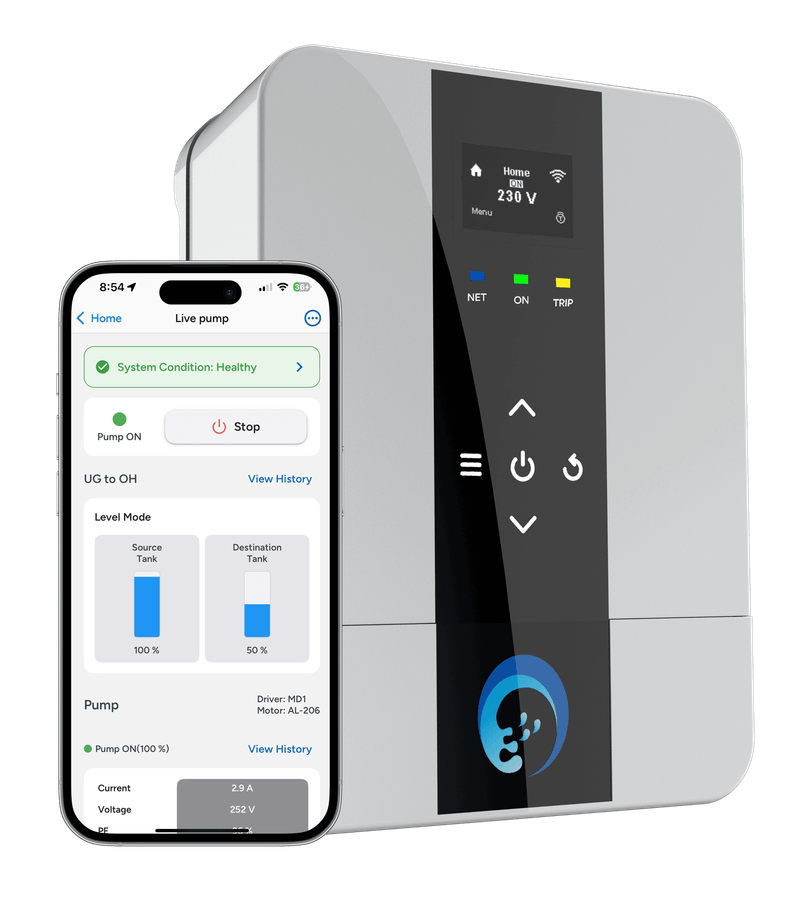
Engineered and built by us — each one the starter, the controller and the protection in a single box.
Questions, answered
How does water metering find a leak? +
By the clock. A building at 3 AM should be still — nobody is bathing, no tank is filling. Any flow at that hour is water leaving the system without anyone using it, which is the definition of a leak. The app watches for exactly that pattern and alerts you, so a slow underground leak is caught in days rather than after months of tanker bills.
Can I meter each wing or each tenant separately? +
Yes. Each meter is its own line in the app, so a society can meter per wing or per riser and settle consumption arguments with numbers instead of opinions. Totals are exportable for billing.
The rest of the system
Every capability runs on the same controllers, the same app and the same live data.
Smart tank monitoring & automation
Two ways to read a tank — non-contact ultrasonic on the lid, or a contact hydrostatic level transmitter hanging in the water. Both report live percent and litres, warn you before an overflow or an empty tank, and feed the same reading the controller switches your pumps on.
How it is done →Pressure monitoring
Hydro-pneumatic (HPN) systems keep constant pressure across a whole building: pumps cascade in as demand rises, each start goes to the pump with the fewest starts so the set wears evenly, and a pump that trips is covered by the next. A pressure transmitter on the header puts live line pressure in the app — which pumps are running, pressure trends and every changeover.
How it is done →Temperature & heat pump monitoring
A monitored circulation loop keeps hot water at every tap the moment it opens — no running the shower cold for a minute. The app watches loop temperature, runs the circulation pump only when needed, and coordinates heat pumps and geysers so comfort never fights efficiency.
How it is done →Water quality & RO monitoring
The RO plant’s own numbers on your phone: raw, treated and reject TDS, pH and ORP, flows, the pressures either side of the membrane, and every pump, switch and tank float — with an alert the moment something trips.
How it is done →Timers & schedules
Garden irrigation, landscape zones and fountains run to a schedule you set once from your phone: start time, run duration, which days, which zone. The controller keeps time locally, skips a cycle when the tank is too low to spare the water, and logs every run.
How it is done →Pump control, fault tracking & stats
Every pump shows its truth in the app: running, stopped or tripped and why, current, voltage and run hours — and a Start/Stop that works from anywhere. A fault alert reaches your phone the moment a pump trips.
How it is done →More in Water Automation & Controls
Want water metering & batching on your site?
Tell us what your pump room looks like today — we design, retrofit and stand behind the whole system.