

Devyami
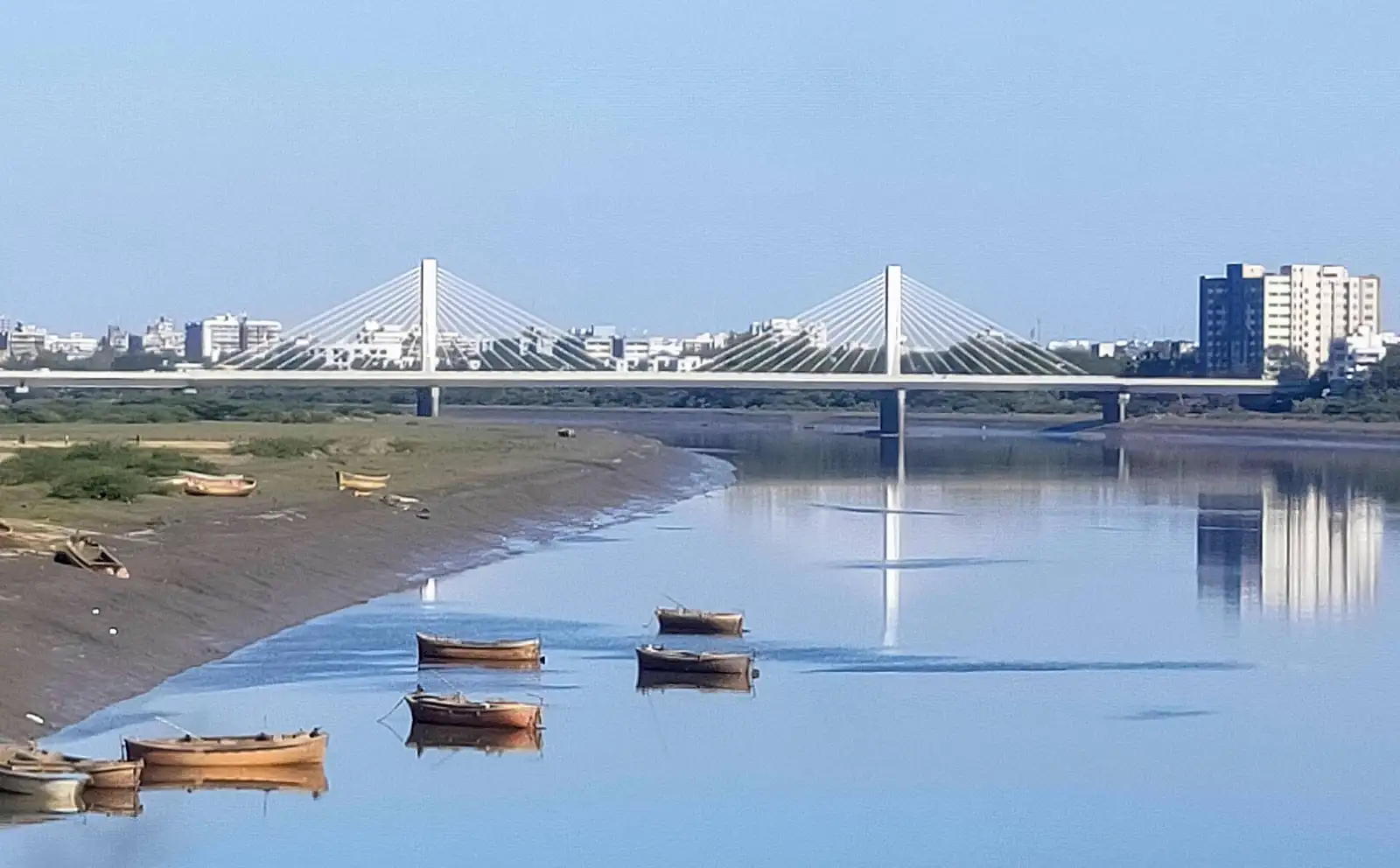
A cable-stayed bridge over the Tapi river, Surat

Smart water solutions in Surat

Tank automation, pumps, water heating, treatment and pools — designed around Surat's water, installed and serviced locally, and watched from your phone.

  • Designing water systems since 1996
  • Free site visit
  • Works without internet
Photo: Pravega · CC0 1.0

Surat's water

Tapi water, monsoon creeks and towers that need pressure

SMC draws its water mainly from the Tapi, upstream of the Rander–Singanpore weir. Heavy rain, high tides and dam releases have flooded the city before, so Surat buildings need storage, steady pressure and pumps that start themselves.

Surat's water story is the Tapi's. SMC built the weir-cum-causeway between Rander and Singanpore in 1995 to hold back tidal saltwater and store river water, and intake wells upstream feed treatment plants at Sarthana, Katargam, Rander, Varachha, Kosad and Mota Varachha. Newer zones such as Mota Varachha, Dindoli and Godadara run on 24x7 schemes, while areas like Puna receive water in scheduled slots. Groundwater near the coast turns saline, and the city has flooded badly before. Devyami matches pumps, level controllers and treatment to all of it, from Varachha row houses to Vesu towers.

Main source
Tapi river
intake wells above the weir
Treatment capacity
About 1,470 MLD
SMC figure for 2015–16
Groundwater
Shallow, saline near coast
hardness up to ~1,350 mg/l
Annual rainfall
Around 1,200 mm
mostly June to September

How water reaches you in Surat

  1. Step 1

    Tapi reservoir

    The weir-cum-causeway at Rander–Singanpore keeps tidal saltwater out and holds a reservoir of river water for the city.

  2. Step 2

    Intakes and treatment

    Twelve intake wells upstream of the weir feed SMC's plants at Sarthana, Katargam, Rander, Varachha, Kosad and Mota Varachha.

  3. Step 3

    Reservoirs and ESRs

    Treated water moves through underground reservoirs and elevated tanks, such as ESR-E8 near Puna Gam lake, into each zone's network.

  4. Step 4

    Your sump

    Your society's sump catches the scheduled supply, or a 24x7 connection keeps it topped up, before pumps lift it to every floor.

  5. Where we take over

    Your tank, automated

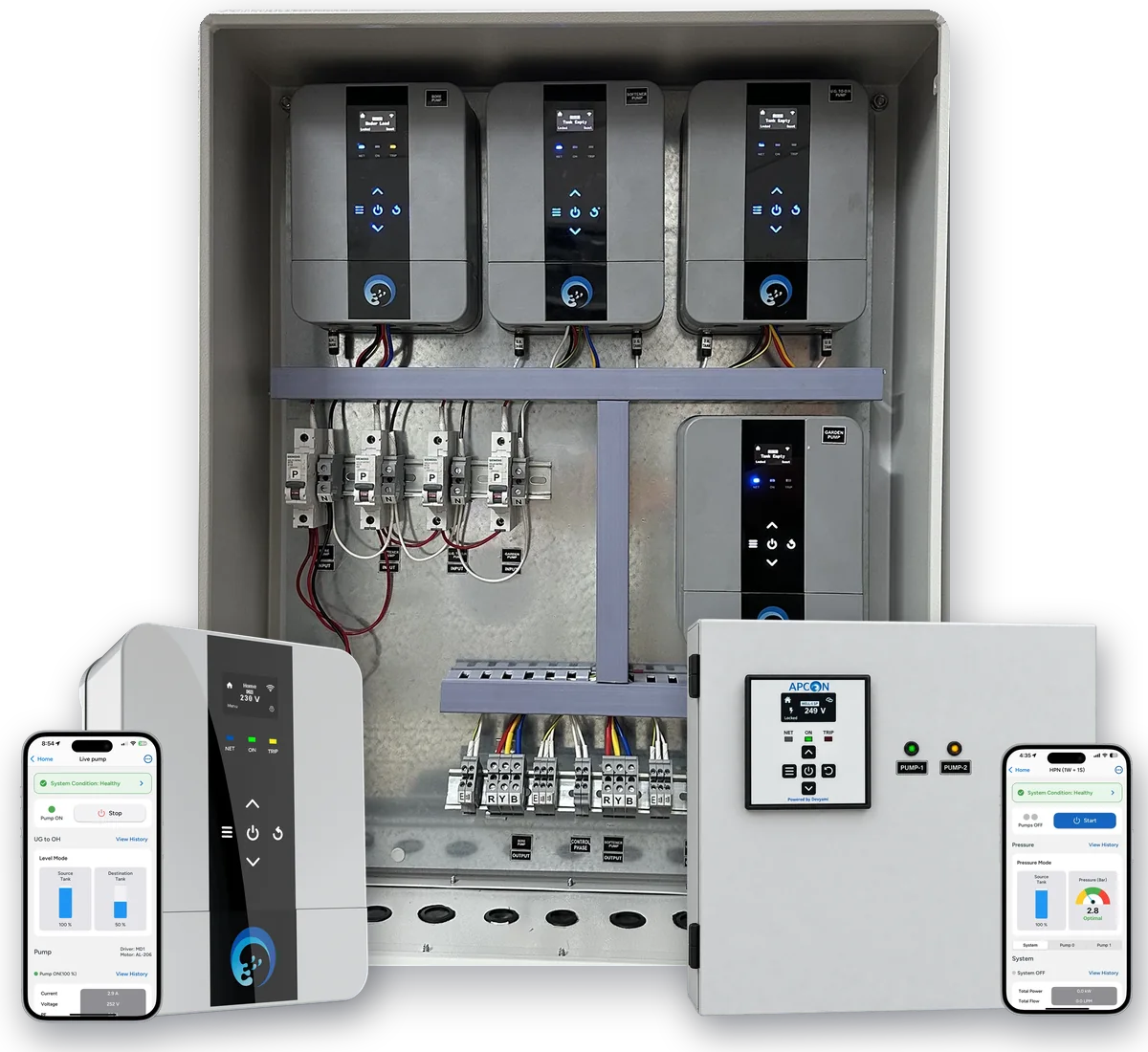
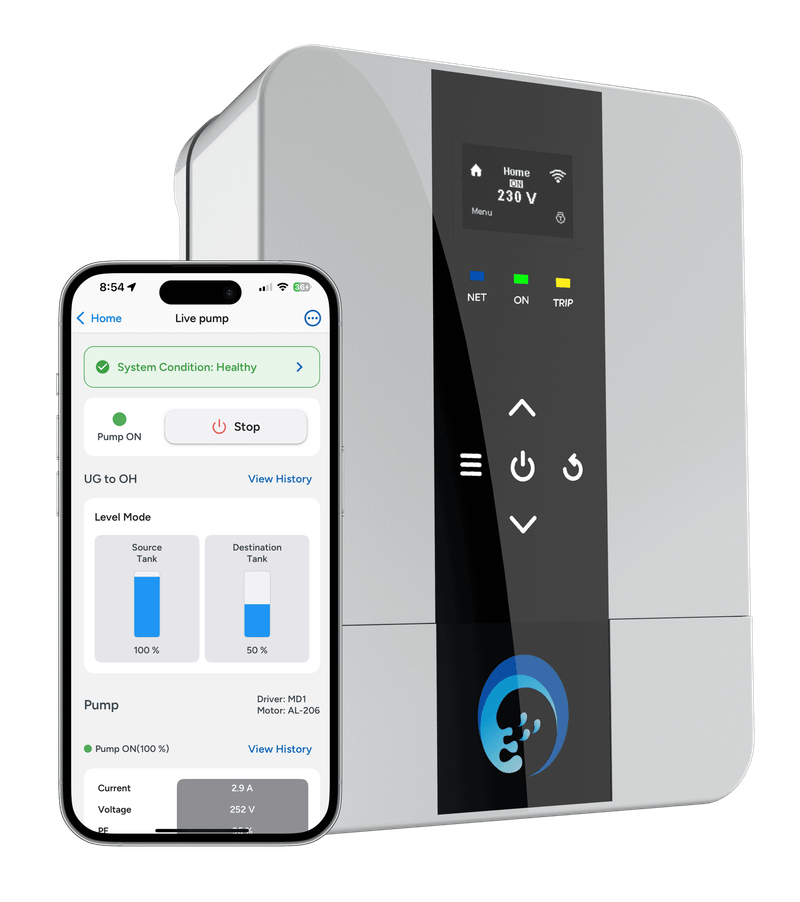
    Sensors read every tank, an APCON controller runs and protects the pump, and the app shows it all on your phone.

    How automation works →

Surat's water, honestly

What Surat throws at your water system, and the fix for each

Low pressure at the network's edge

In September 2026 SMC trialled splitting the network fed by ESR-E8 near Puna Gam lake into two sections after complaints of low pressure and inadequate supply. Societies were given separate slots, one from noon to 3:30 pm and the other from 4 pm to 9 pm.

How we fix it

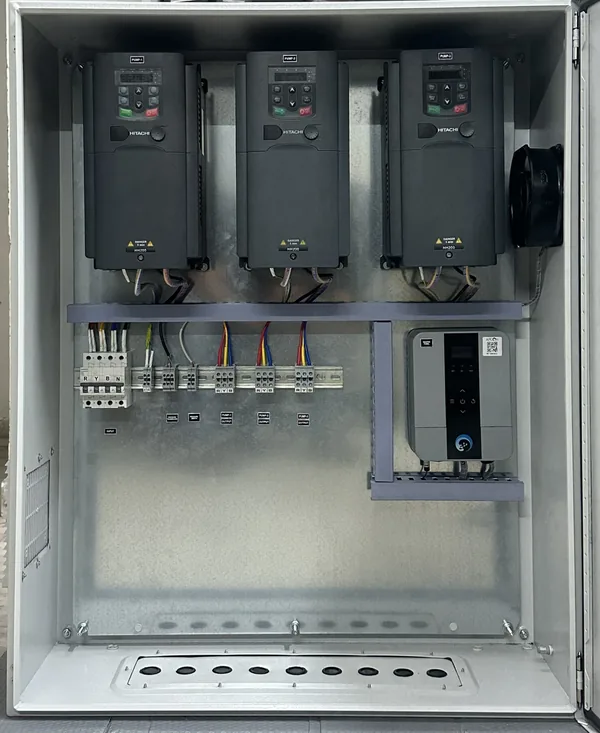
A motor driver with level sensors runs your transfer pump automatically during your slot and refuses to run it dry when pressure fails. You get full tanks without anyone watching the clock.
Rain, river and tide together

In August 2006 heavy releases from the Ukai dam, made worse by high tides, flooded an estimated 80–95 percent of the city. In July 2026 the Bhedwad creek crossed its danger level and societies between VIP Road-1 and VIP Road-2 were waterlogged.

How we fix it

Basements and low-lying compounds need dewatering pumps on automatic float control, ideally a duty-standby pair so one failure does not leave the basement filling.

Saline, hard groundwater near the coast

CGWB finds shallow groundwater more saline in Surat's coastal belt, with the deeper alluvial aquifers saline outright, and total hardness in its samples ranging from about 200 to 1,350 mg/l. It warns that heavy pumping near the sea can draw salinity further inland.

How we fix it

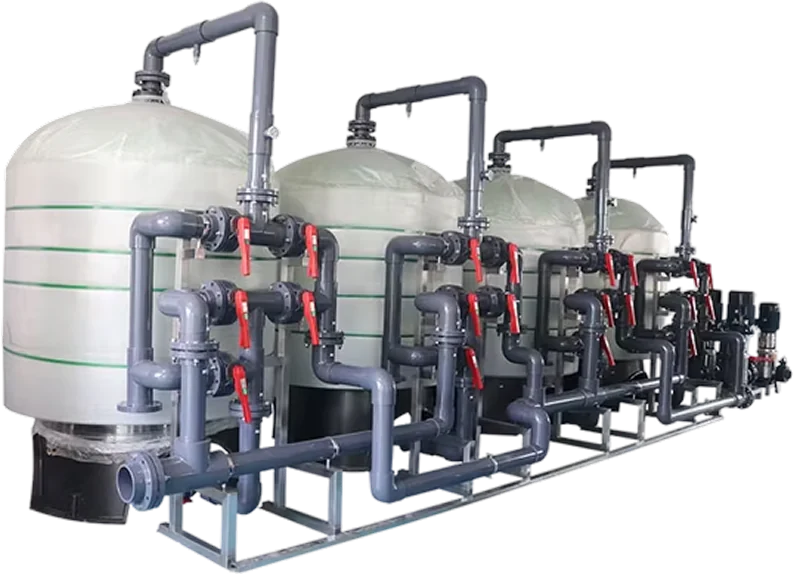
We test before we specify: a softener for hardness, RO where TDS and chloride are high, and multigrade filtration ahead of both. For towers that blend borewell and municipal water, we size the plant for the worse source.

Upper floors in tall towers

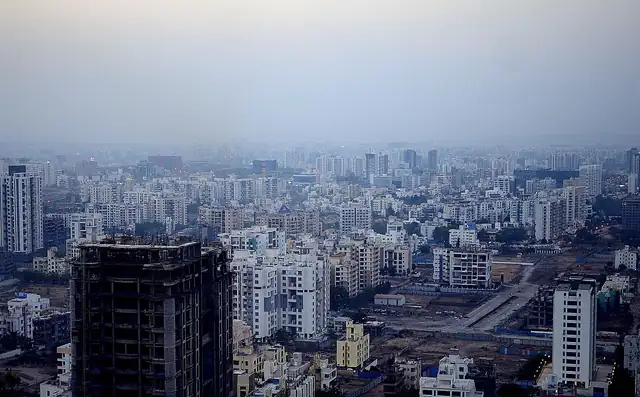
Western neighbourhoods such as Vesu have grown into a skyline of residential towers. Upper floors, podium gardens and amenity blocks depend on pumped pressure rather than gravity from a single overhead tank.

How we fix it

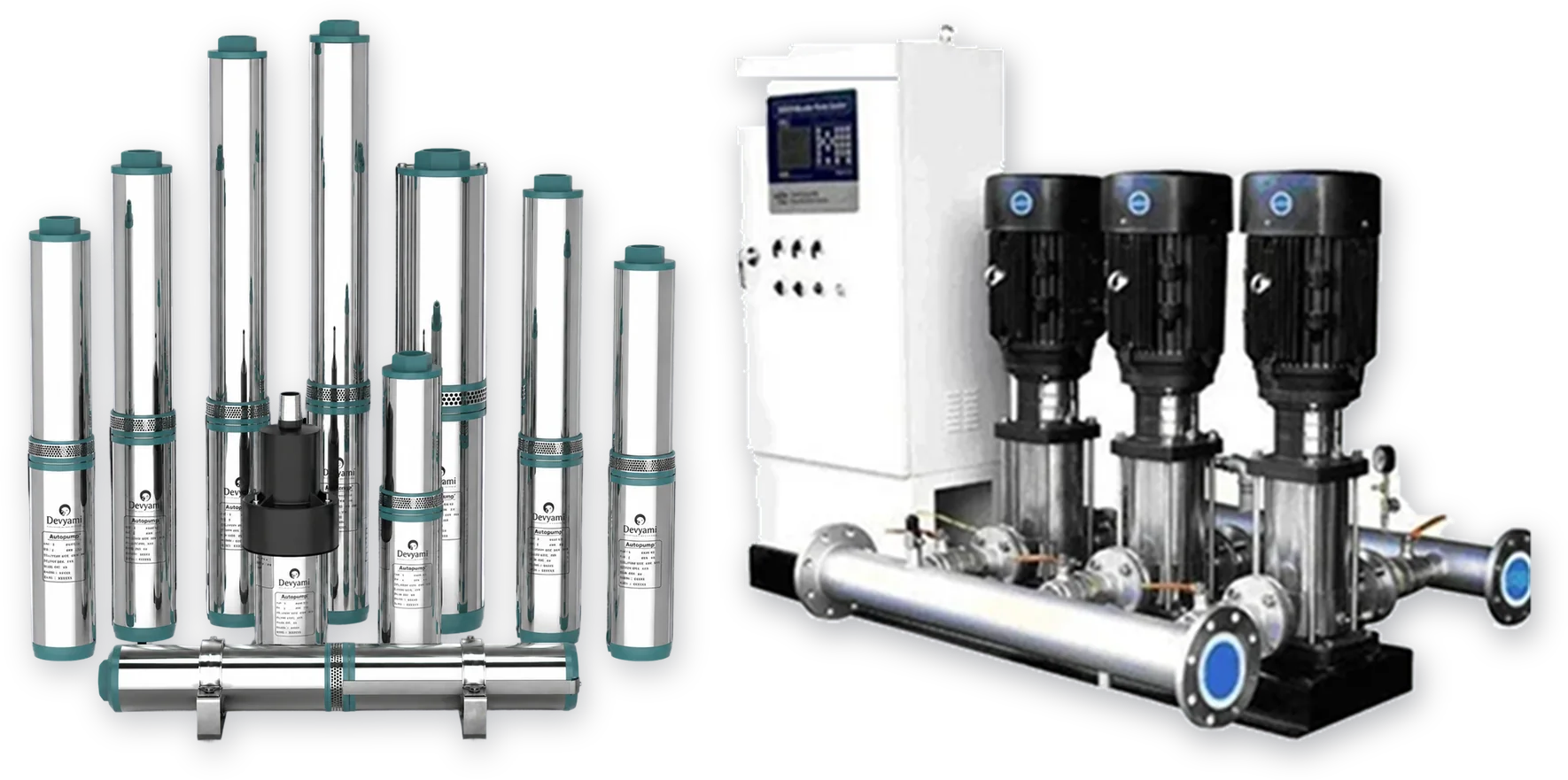
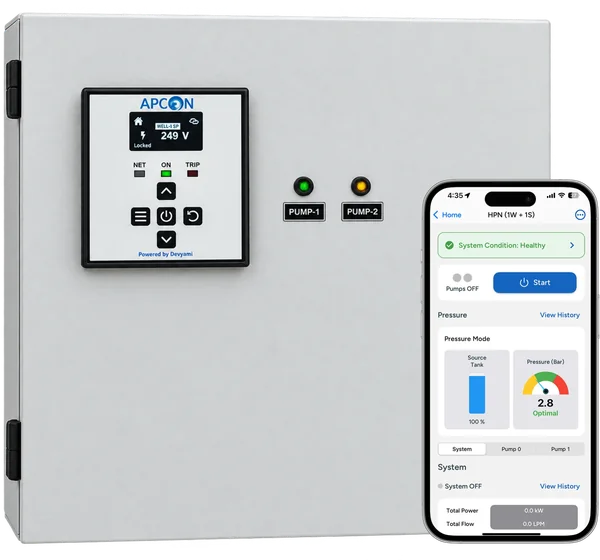
A hydro-pneumatic system on our multi-pump controller holds a steady set pressure with VFD and PID control, bringing in up to six pumps as demand rises and resting them as it falls.

Cuts for valve and line work

On 10 September 2026 valve work on a transmission line outside the Bhestan water distribution station disrupted supply across parts of Udhna and Kanakpur, slot by slot through the day. SMC asked residents to store enough water in advance.

How we fix it

The app shows every tank's level live and alerts you when a supply window passes without the sump filling, so a planned or unplanned cut never catches your building empty.

Something else?

Tell us what your water is doing

Describe it in your own words. An engineer who knows Surat's conditions will call you back.

Start with a free site visit

Through the year

Surat's water, season by season

Summer

April is the hottest month, with mean highs near 38°C and humidity climbing ahead of the monsoon, so cooling and storage demand peak together.

Dry-run protection and usage alerts →

Monsoon

Around 1,200 mm falls in a normal year, mostly from June to September, and when downpours meet high tide the creeks back up into low-lying societies.

Dewatering pumps and UV treatment →

Winter

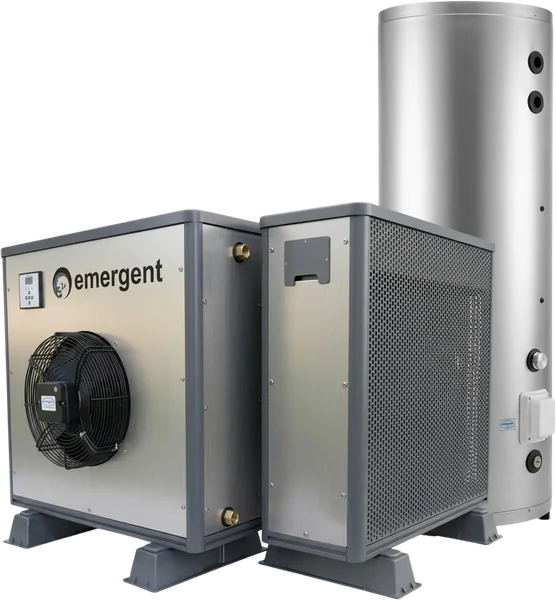
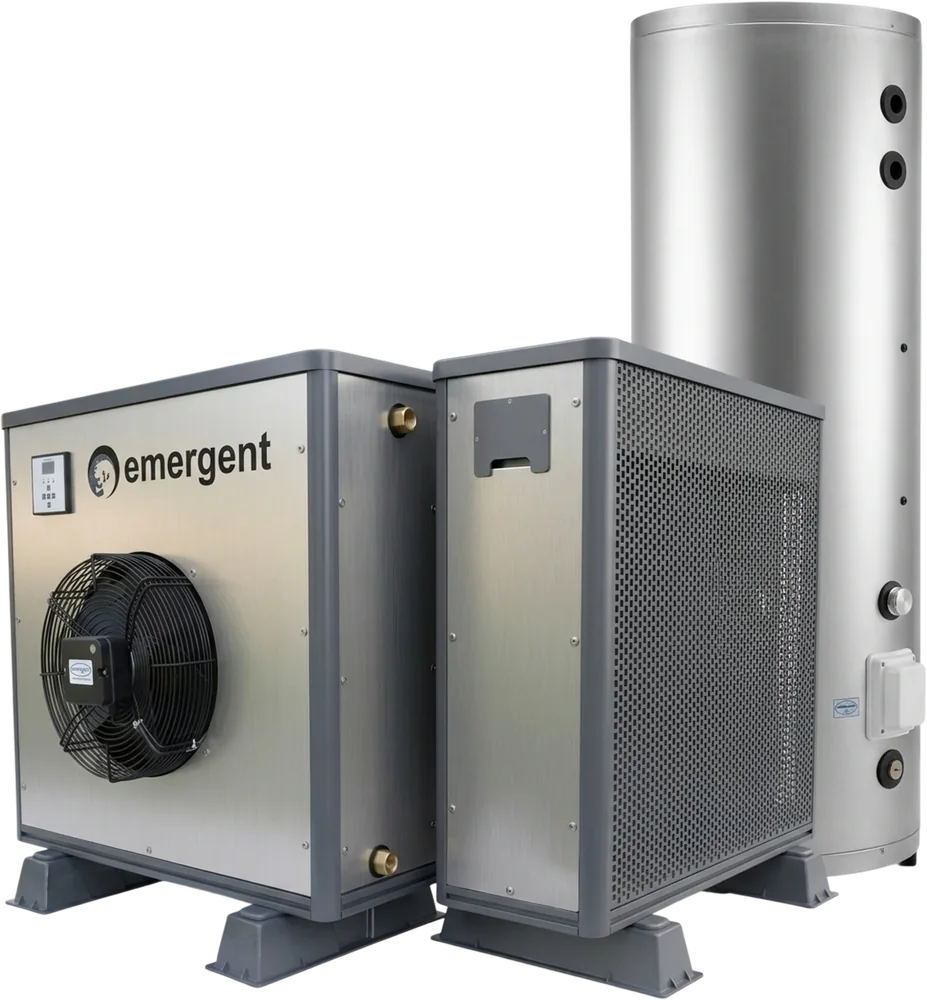
Winters are mild, with January nights around 14°C, so heat pumps run efficiently almost all year.

Heat pumps and solar hot water →

Watch it run

Watch a building in Surat run its own water

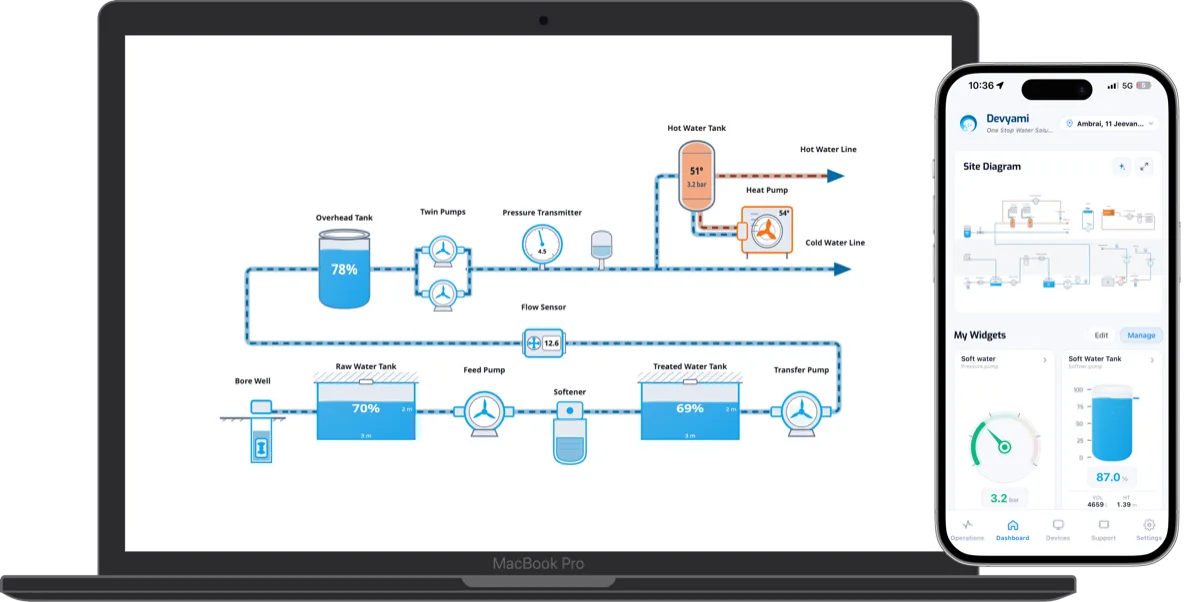
This is the same diagram our customers see in the app. The sump and the overhead tank are both sensed, and one APCON controller decides when the pump runs.

  • The pump starts when the overhead tank is low, but only if the sump has water to give
  • It stops at your full level, so the tank never overflows
  • Dry run, overload and voltage faults trip it before the motor is damaged
  • Your phone shows each level, each pump run and each alert as it happens
74%74%7,400 L7,400 L3 m3 m2 m2 mUnderground TankHydrostatic probePump56%2,800 L56%2,800 LOverhead Tank2.5 mUltrasonicPUMP ON229 VAPCON Controller

Who we build for

Every kind of Surat building

  • Old-city homes in Gopipura and Nanpura
  • Row houses and societies in Varachha
  • High-rise towers in Vesu
  • Textile markets and processing units
  • Hazira and Sachin industrial estates

Our Workflow

Four steps from first call to lifelong service. Swipe or tap a step.

Free Site Visit
Step 1

Free Site Visit

Our engineers evaluate your requirements and give you accurate consultation for free.

📍 Request Site Visit
Get Quotation
Step 2

Get Quotation

From your requirements we will provide you with a quotation with multiple options.

Installation
Step 3

Installation

Our expert engineers will install, inspect & commission the systems at your site.

After Sales Services
Step 4

After Sales Services

Be it repairs or maintenance we stand by you as you need more services after sales.

🛠 Register Complaint

Across the city

Serving all of Surat

Old neighbourhoods and new growth corridors alike, from single homes to whole townships.

  • Nanpura
  • Gopipura
  • Rander
  • Katargam
  • Varachha
  • Puna
  • Mota Varachha
  • Adajan
  • Pal
  • Vesu
  • Piplod
  • Udhna
  • Limbayat
  • Dindoli

And around Surat

  • Kamrej
  • Bardoli
  • Olpad
  • Palsana
  • Sachin
  • Hazira

Installers and plumbers

Work on water systems in Surat?

Become a Devyami dealer. You get our controllers, engineering support and the leads from this page.

Become a dealer

Questions from Surat

What people here ask us

Our Puna society gets water only in an afternoon slot. How do we keep every flat supplied?

Size the sump to hold a full day's use, then let a motor driver with level sensors run the transfer pump whenever the sump has water and the overhead tank has room. It shuts the pump on dry run, overload or a voltage fault, which matters when pressure drops at the end of a slot.

What pressure system suits a high-rise tower in Vesu?

A hydro-pneumatic system with two or more pumps on our multi-pump controller, using VFD and PID control to hold the set pressure on every floor. Pumps rotate duty so wear is shared, and extra pumps come in only when demand rises. We size it from your floor count and peak-hour draw.

How do we protect a basement in Adajan or Vesu from monsoon flooding?

Install a dewatering sump with a duty and a standby submersible pump on our twin motor driver, with float control so they start on rising water. Add app alerts for high water and pump trips so your facility team hears about it before residents do.

Do you install and service Devyami systems in Surat?

Yes. Tell us about your building, society or factory and our engineers design the system around Surat's water. A Devyami dealer or installer then installs, commissions and services it locally, and every connected controller can be checked remotely through our platform. The first site consultation is free.

Will the automation keep working without internet or after a power cut?

Yes. Level switching, pressure control, schedules and every motor protection run inside the controller on your wall, not in the cloud. The internet only carries the live view and alerts to your phone. The controller keeps its own real-time clock and remembers its delays through a power cut.

Can you automate my existing pumps and tanks without new wiring?

Usually, yes. The APCON Motor Driver takes the old starter panel’s place on the wall, on the pump and tanks you already have. Wireless level sensors reach terrace and underground tanks where running a cable would mean breaking walls. A single-pump retrofit is usually done in a few hours.

More answers in our FAQ and guides.

Free site visit

Talk to us about Surat

Describe your home, society, hotel or factory. We'll design around Surat's water and connect you with a Devyami dealer who installs and services locally.

0+
Years Experience
0+
Successful Projects
0+
Happy Customers

Prefer to call? +91 99252-26610

Get a solution in Surat

We'll only use these details to respond to your enquiry. See our privacy policy.

Sources for the Surat facts on this page
  • Tapi main source; weir at Rander–Singanpore 1995; Sarthana, Rander, Katargam, Kosad, Mota Varachha plants; 1,468 MLD; 24x7 in Mota Varachha, Dindoli, Godadara — suratmunicipal.gov.in
  • Weir blocks saline intrusion; 12 intake wells upstream; plant list — tapirevival.suratmunicipal.org
  • Coastal salinity, saline deep aquifers, hardness 200–1,350 mg/l, ~1,210 mm rainfall, April max ~37.7°C, Jan min ~14.3°C — cgwb.gov.in
  • ESR-E8 Puna network split into two slots over low pressure (Sept 2026) — deshgujarat.com
  • Bhestan WDS valve work disrupts Udhna and Kanakpur zones (10 Sept 2026) — deshgujarat.com
  • 2006 flood: Ukai releases, high tides, 80–95% of city flooded — en.wikipedia.org
  • Bhedwad creek above danger level, VIP Road societies waterlogged, textile markets shut (31 July 2026) — deshgujarat.com
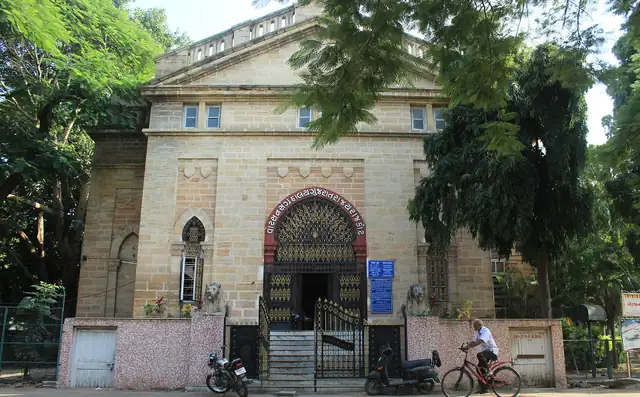
  • Surat Castle: round corner towers, Portuguese-style upper sections, east gate, on the Tapi bank — en.wikipedia.org
  • Hero photo: Pravega, CC0 1.0 , via Wikimedia Commons